What Is Vitiligo? Types, Treatment & Truth Behind Common Myths
Few skin conditions carry as much fear and social stigma as vitiligo. It can affect relationships, marriage prospects and self-confidence, yet most of the worry comes from misinformation. Here is a clear, doctor-backed guide to the facts, based on insights from Dr. Neha Yadav (MD & DNB Dermatology).
What Is Vitiligo?
Vitiligo is an autoimmune condition. The body’s immune system mistakenly damages melanocytes, the skin cells that produce pigment (melanin). As melanin drops, white skin patches appear on the body.
What Does Vitiligo Look Like?
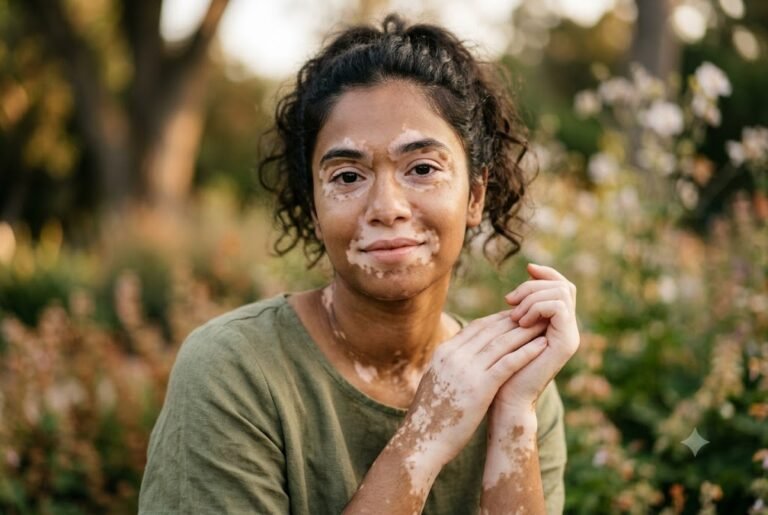
Vitiligo usually starts with the skin color fading in a small area. The patch may turn slightly pink before becoming completely white with sharp borders. Hair growing in these patches may stay black, or it may look golden or white. If you have white spots on skin or white marks on skin that are slowly spreading, it is worth getting them examined. Vitiligo can appear on any part of the body, including white patches on face, lips, hands and feet.
Why Does Vitiligo Happen?
There is rarely a single cause. Vitiligo develops from a combination of:
- Genetic susceptibility
- Immune system imbalance
- Environmental and lifestyle factors
- Stress
- Repeated friction or trauma to the skin
Types of Vitiligo
Knowing the types of vitiligo helps doctors choose the right approach.
Focal Vitiligo:
A few small patches, usually two to four, in one or more areas.
Segmental (Dermatomal) Vitiligo:
Patches appear in a line or one larger patch following the path of a nerve.
Acrofacial Vitiligo:
Affects the tip of the nose, lips, palms and soles.
Mucosal Vitiligo:
Involves mucosal surfaces such as the lips or genital area.
Generalized Vitiligo
Large areas of the body, or nearly all of it, lose pigment.
Does Vitiligo Spread?
Can It Spread on Your Body?
Yes, it can. Someone with one patch may develop more, and a significant immune imbalance can involve larger areas. However, this does not happen to everyone, and extensive spread is not inevitable.
Is Vitiligo Contagious?
No. Vitiligo cannot pass from one person to another through touch or close contact.
Is Vitiligo Genetic?
Vitiligo is a polygenic, multifactorial disorder, meaning genetics, immunity, environment and lifestyle all play a role. Genetic susceptibility exists, but it is not certain that a parent’s vitiligo will pass to their children. The same is true of other autoimmune conditions such as thyroid disease, rheumatoid arthritis and diabetes.
Vitiligo Treatment Options.
Effective vitiligo treatment depends on the type, the affected area and how quickly the condition is progressing
Vitiligo Medical Therapy.
For limited patches, dermatologists may prescribe topical corticosteroids, tacrolimus or JAK inhibitors. For rapid or widespread vitiligo, oral immunosuppressants such as corticosteroids, methotrexate or azathioprine may be needed. JAK inhibitors are a recent advance that can help halt the patches and encourage repigmentation.
Light Therapy
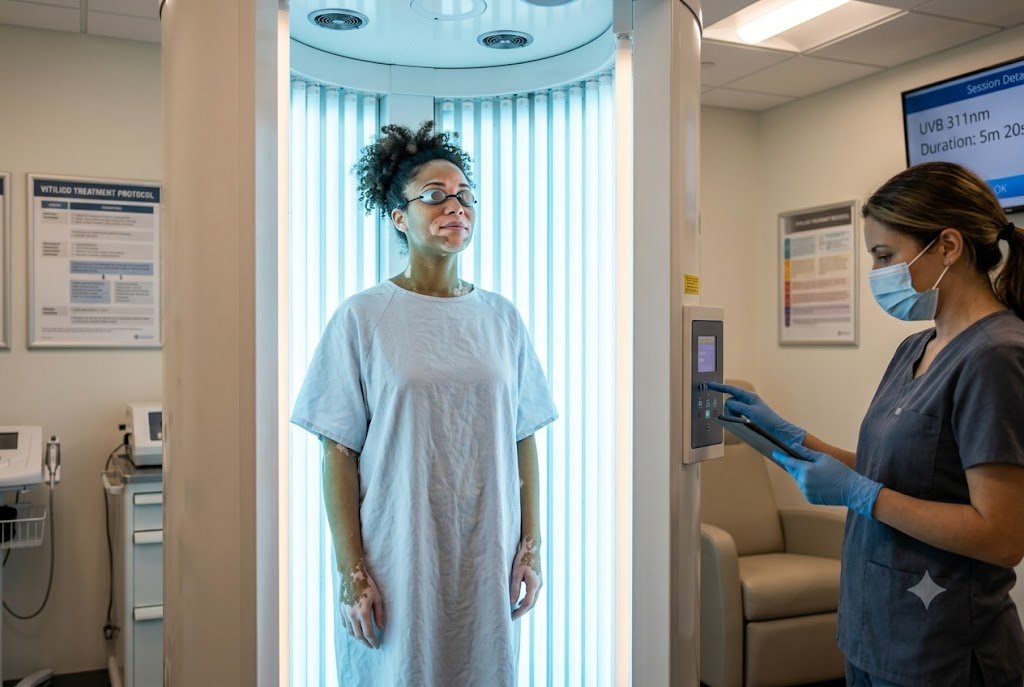
Phototherapy, including narrowband UVB and PUVA, is another established option.
Surgical Repigmentation
When vitiligo is stable and no longer spreading, procedures such as punch grafting, blister grafting and melanocyte or non-melanocyte transfer can restore color.
Treatment takes patience. Managing vitiligo can take years, and surgical results take months to appear.
When to See a Dermatologist
If you notice new white patches, or existing ones are growing, consult a qualified dermatologist early. Vitiligo is treatable, and an accurate diagnosis is the first step toward the right plan. Just as important, meet people living with vitiligo with compassion, not fear.
Common Vitiligo Myths, Busted
| # | Myth | Fact |
|---|---|---|
| 1 | Vitiligo is contagious. | It is not. Vitiligo cannot spread through touch, sharing items, or close contact. |
| 2 | Milk, curd, or sour foods cause it. | Diet does not trigger vitiligo. No food combination causes the condition. |
| 3 | Poor hygiene is to blame. | There is no link between hygiene and vitiligo. It is not caused by being unclean. |
| 4 | It is a sexually transmitted disease. | It is not. Vitiligo is not an infection of any kind. |
| 5 | People with vitiligo cannot have healthy children or a happy married life. | They can do both. Vitiligo does not limit family life or relationships. |
This content is for awareness only and is not a substitute for advice from a dermatologist.
── Questions, Answered
Frequently Asked Questions
Vitiligo is an autoimmune condition in which the immune system damages melanocytes, the cells that produce skin pigment. This leads to white patches on the skin. There is rarely one single cause. Genetics, immune imbalance, stress, environmental factors, lifestyle and repeated friction or trauma to the skin can all play a role.
No. Vitiligo is not contagious. It cannot spread through touch, close contact, sharing food or sharing personal items. It is also not a sexually transmitted disease.
Not always. Several skin conditions can cause white spots on skin or white marks on skin, so a proper diagnosis matters. A dermatologist can examine the patches and tell you whether it is vitiligo or something else. Vitiligo patches typically have sharp borders and may appear on the face, lips, hands or feet.
Vitiligo can spread. A person with one patch may develop more over time, though this does not happen to everyone. It is a multifactorial condition, so genetic susceptibility exists, but it does not mean a parent's vitiligo will definitely pass to their children.
There is no single best option. Vitiligo treatment depends on the type, the area involved and how fast the patches are progressing. Options include topical corticosteroids, tacrolimus, JAK inhibitors, oral medicines for widespread cases, light therapy such as narrowband UVB, and surgical repigmentation for stable vitiligo. Treatment takes patience, often years, and surgical results take months to show.
No. This is a common myth. Milk, curd and sour foods do not cause vitiligo or make it spread. Poor hygiene is not a cause either. A balanced diet is good for overall health, but no food triggers vitiligo.
── Take The First Step
Book a consultation today and find out the best treatment solution for you
Individual results may vary. Book a consultation to discuss what outcomes are realistic for your skin.